|
|
||||
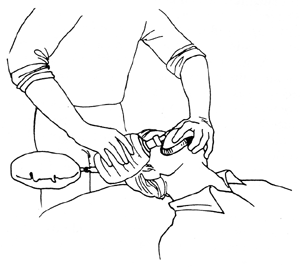
Bag and Mask VentilationThe bag-valve-mask system is designed to help ventilate an unconscious victim for long periods, while delivering high concentrations of oxygen. This system can be useful in extended CPR attempts because when using external cardiac compressions, the cardiac output is cut to 25 to 30 percent of the normal capacity and artificial ventilation does not supply enough oxygen through the circulatory system to maintain life for a long period. Various types of bag-valve-mask systems that come in both adult and pediatric sizes are in use. Essentially, they consist of a self-filling ventilation bag, an oxygen reservoir, plastic face masks of various sizes, and tubing for connection to an oxygen supply. The bag-valve-mask system is difficult to use if the individual has not had a great deal of practice with it. It must not be used by inexperienced persons if more experienced persons are available. The system can be hard to clean and reassemble properly, the bagging hand can tire easily, and an airtight seal at the face is hard to maintain, especially if a single rescuer must also keep the airway open. In addition, the amount of air delivered to the victim is limited to the volume that the hand can displace from the bag (approximately 1 liter per compression). Technique - Hook the bag up to an oxygen supply and adjust the flow from 10 to 15 liters per minute depending on the desired concentration (15 liters per minute will deliver an oxygen concentration of 90 percent). After hyperextending the neck to open airway or inserting an oropharyngeal airway, place the mask over the face and hold it firmly in position with the index finger and thumb, while the remaining fingers keep the jaw tilted upward . The other hand is used to compress the bag once every 5 seconds. Observe the chest and abdomen for expansion. If none is observed, the face mask seal may not be airtight, the airway may be blocked, or some component of the bag-valve-mask system may be malfunctioning.
This section based on "First Aid and Emergency Procedures," "Hospital Corpsman 3 & 2," 1989, Department of the Navy.
Home · Military Medicine · Sick Call · Basic Exams · Medical Procedures · Lab and X-ray · The Pharmacy · The Library · Equipment · Patient Transport · Medical Force Protection · Operational Safety · Operational Settings · Special Operations · Humanitarian Missions · Instructions/Orders · Other Agencies · Video Gallery · Forms · Web Links · Acknowledgements · Help · Feedback Approved for public release; Distribution is unlimited.
*This web version is provided by The Brookside Associates, LLC. It contains original contents from the official US Navy NAVMED P-5139, but has been reformatted for web access and includes advertising and links that were not present in the original version. The medical information presented was reviewed and felt to be accurate in 2001. Medical knowledge and practice methods may have changed since that time. Some links may no longer be active. This web version has not been approved by the Department of the Navy or the Department of Defense. The presence of any advertising on these pages does not constitute an endorsement of that product or service by either the US Department of Defense or the Brookside Associates. The Brookside Associates is a private organization, not affiliated with the United States Department of Defense.
© 2015, Brookside Associates, LLC. All rights reserved
|
|
|||